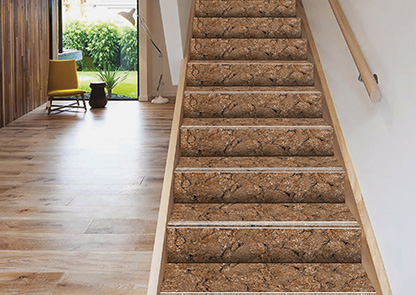
Ceramic Tiles
Introduction: Ceramic tiles are tiles made from natural clay, sand, and other minerals, shaped, glazed (optional), and fired in a kiln at high temperatures. They are one of the oldest and most widely used tile categories, valued for their affordability, design variety, and ease of installation.
Water Absorption: Typically 10-15% (lower if glazed).
Durability: Moderate strength compared to vitrified/porcelain.
Applications: Best suited for indoor use, wall cladding, flooring, decorative use
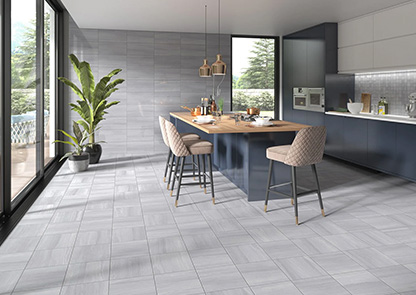
Vitrified Tiles
Introduction: Vitrified tiles are a type of ceramic tile made by fusing clay, silica, quartz, and feldspar at very high temperatures through the vitrification process, which gives them a glass-like, non-porous structure. This makes them stronger, denser, and more durable than ordinary ceramic tiles, with very low water absorption.
Water Absorption: <0.05% (almost waterproof)
Durability: Long-lasting, resistant to chemicals and weather
Types: Full-Body Vitrified Tiles, Double-Charge Vitrified Tiles, Glazed Vitrified Tiles (GVT/PGVT), and Porcelain Tiles.
Applications: Residential & commercial flooring, outdoor spaces & parking areas, kitchens and bathrooms, Cladding on exterior walls and facades
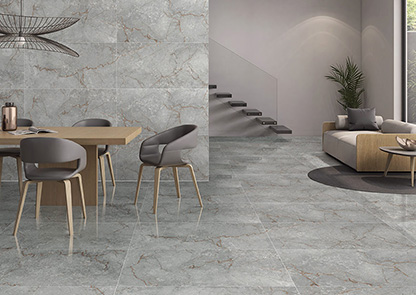
Porcelain Tiles
Introduction: Porcelain tiles are a premium type of vitrified tile, made from highly refined white clay, silica, and feldspar, fired at very high temperatures (≈1200-1250 °C). This process makes them extremely dense, durable, and almost non-porous.
Water Absorption: <0.5% (nearly waterproof)
Density: Scratch-resistant, stain-resistant, frost-resistant
Durability: Scratch-resistant, stain-resistant, frost-resistant
Types: Glazed Porcelain Tiles (GVT/PGVT), Full-Body Porcelain Tiles, Polished Porcelain Tiles and Matte/Textured Porcelain Tiles
Applications: Residential, Commercial, Outdoor, Luxury Projects
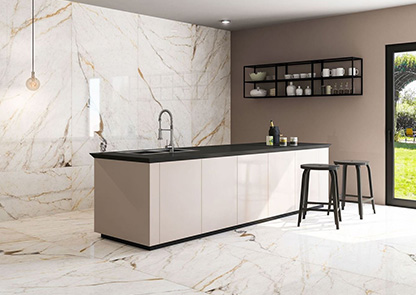
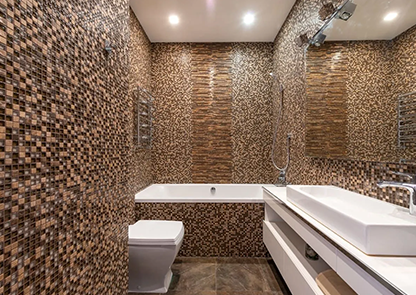
Mosaic Tiles
Introduction: Mosaic tiles are small pieces of ceramic, glass, natural stone, or porcelain, usually less than 2x2 inches in size, arranged to form patterns or images. They are mounted on mesh sheets or paper for easy installation.
Water Absorption: Very low in porcelain & glass mosaics (good for wet areas like pools).
Durability: Resistant to stains, scratches, and chemicals (depending on material).
Applications: Swimming pools & spas, bathrooms & kitchens, accent walls & decorative flooring, outdoor areas, and artistic murals & customized installations.
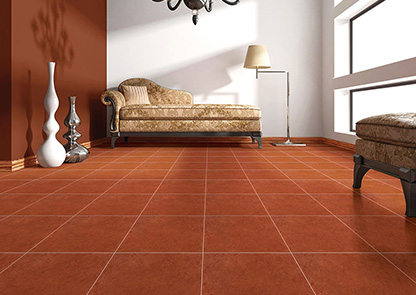
Terracotta Tiles
Introduction: Terracotta literally means “baked earth.” These tiles are made from natural red/brown clay that is shaped and fired at relatively low to medium kiln temperatures (≈ 1000-1150 °C). They are one of the oldest and most traditional types of tiles, valued for their warm, rustic, and earthy appearance.
Porosity: High water absorption (≈ 5-15%), unless sealed.
Surface: Matte, earthy texture; can be glazed or unglazed.
Durability: Good for indoor/outdoor use if properly sealed; otherwise prone to stains and weathering.
Applications: Flooring, roofing, walls, landscaping, decorative uses
Step & Riser Tiles
Introduction: Step and riser tiles are specialized staircase tiles, with step tiles covering the tread (horizontal part you step on) and riser tiles covering the vertical front face between two steps. Made mostly from vitrified or porcelain (sometimes ceramic or stone), they are 10-12 mm thick.
Strength: Highly durable, scratch-resistant, and have low water absorption (<0.5%).
Durability: Designed for high foot traffic and long life.
Applications: Residential and commercial staircases, outdoor steps, public buildings, luxury spaces where design continuity from floor to stairs is desired